Prepaid WiMAX - The 4G Technology That Lost The War!
What is prepaid WiMAX, and why do you want to know about it? First, I need to let you know that WiMAX ultimately died before it even took off, so the information here is for those interested in the evolution of technology, and who have a thirst for wireless knowledge!Before even talking about prepaid WiMAX, we'll need to backup a bit and answer the question "What is WiMAX?"! The name sounds mysteriously like Wi-Fi, so you might be asking yourself if these two technologies are
 related. To
answer
that question, and demystify what it is and why it exists, we'll break
it down with the following series of questions. Needless to
say,
WiMAX was the first 4G solution commercially available in the
modern world!
related. To
answer
that question, and demystify what it is and why it exists, we'll break
it down with the following series of questions. Needless to
say,
WiMAX was the first 4G solution commercially available in the
modern world!What does WiMAX stand for?
WiMAX stands for Worldwide Interoperability for Microwave Access, Inc. It's an organization that manages the technology standards on which WiMAX is based (IEEE 802.16). Though I haven't seen this mentioned anywhere else, the name kind of makes me think of "Maximum Wi-Fi." Don't you think? Although there's no direct connection between WiMAX and such an interpretation, I think it does help to think about how the two technologies are related. In other words, think of Wi-Fi as short range like in your home or a coffee shop, while WiMAX is more in the range of city-wide; i.e. maxing out your Wi-Fi connection. Let's dig into this a little more with the next question.
What's the difference between Wi-Fi and WiMAX?
While they're based on related technologies, they are different. Wi-Fi operates on the 802.11 standard, while WiMAX functions on 802.16. So what does this really mean in terms of how you, the user, will use the technology? It means that Wi-Fi has a limited range of 100-300 feet (or 30-100m). That's why when you have a wireless network at home, you may have trouble accessing your Internet connection if your wireless router is in one corner of the house, and you're downstairs in the opposite corner of the house. Or why you might have trouble picking up a strong and consistent signal from your neighbors (assuming they're letting you share their unsecured WiFi signal!).
On the other hand, WiMAX technology standards allow for a much longer range of access of 30 miles (or 50 km) for fixed stations. So, if you wanted to cover your entire neighborhood, for example, you would need to have a Wi-Fi router every 100 feet to ensure that you could travel anywhere in the area without losing a signal. And that doesn't even account for the fact that switching between wireless routers doesn't exactly work seamlessly. To the contrary, you might only need one WiMAX base station to cover your entire neighborhood! Assuming of course that the area does not have a radius of more than 30 miles.
What about speed?
In addition to the extended range that WiMAX has, it also offers higher data rates. So with WiMAX, we're now finally talking about speeds that equal what you would get from your home cable or DSL Internet provider; only now it's completely mobile! What this means is that you're taking the speed of your home connection with you on the road. This technology was the first commercially available mobile broadband offering that allowed customers to watch steaming video, download music, and do all of the things we're used to doing at home without having to worry about finding a coffee shop with Wi-Fi access, or having to think about the speed limitations of 3G. Lastly, WiMAX technology has less interference than does Wi-Fi, which means that you're generally getting a more consistent and reliable connection.
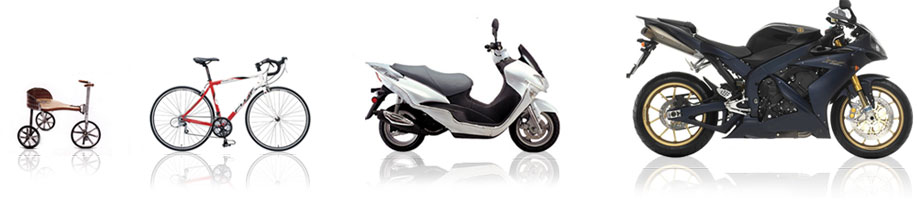
Here's a great illustration of the how the speed of WiMAX compares to other technologies. I found this on a very early version of the Clear.com website, and thought it was so great that I'd include it here. You can visit Prepaid Wireless Broadband page for more details on mobile broadband technology and speeds.
 |
|||
| 2G | 3G | Wi-Fi Hotspot | WiMAX by Clear |
Summary of Advantages
- Higher bandwidth/data rates than Wi-Fi or 3G mobile broadband.
- Covers longer distances than Wi-Fi.
- Open standard technology - Unlike 3G technologies (and now 4G LTE), which are owned and controlled by individual companies (ex. CDMA is controlled by Qualcomm), WiMAX is an open standard. This means that anyone can build hardware for it, which means more competition and lower prices (as well as no additional cost for patents).
- Limited availability - Clear was the only provider, and offered service only in a limited number of select cities.
- Not expected to be mainstream - LTE (Long Term Evolution) was expected to be the global standard for 4G wireless. This is what ultimately led to the death of WiMAX in favor of the worldwide standard of 4G LTE.
As is the theme throughout this entire website, signing a contract for wireless service is not desirable for a number of reasons. Particularly for WiMAX, which was an unproven standard. Do you want to lock yourself into a contract when you don't know if you'll like the service or whether it will work the way you expect it to, or aren't happy with the coverage? No contract, prepaid WiMAX really was the desired option. Fortunately, Clear provided prepaid WiMAX plans. Unfortunately, Clear ultimately didn't survive, and closed shop after 4G LTE took hold.
Conclusion
WiMAX was the first commercially available 4G technology. It offered amazing speed compared to the prevailing technology at the time, and the promise of wide access at costs comparable, and even lower than existing slower 3G technologies at the time. However, even before it had nationwide coverage, Clear (and Sprint) announced that it would be moving to LTE technology, which won out as the 4G standard technology.
UPDATE - Despite Clear and Sprint's best efforts to promote WiMAX as the next generation standard, it failed, and is now a defunct technology. I've kept this information on the site as an interesting historical reference, of which you can learn more by visiting LTE - The 4G Network Technology Standard.
Home
›
Prepaid Wireless Broadband
›
Prepaid WiMAX
| Be Heard! Let prepaid wireless providers know what you want; fill out the survey now. |



Copyright 2008-2023 Prepaid-Wireless-Guide.com - All Rights Reserved
Click to read the Privacy Policy
Comments
Have your say about what you just read! Leave a comment in the box below.