Bring Your Own Device!
What does Bring Your Own Device mean? This term has been around for a long time, however, in recent years it has become more common. It's usually referred to in its short form, BYOD. Wireless carriers use the term to refer to customers bringing a device they already own, that was typically purchased from a different carrier, and activating it on their network.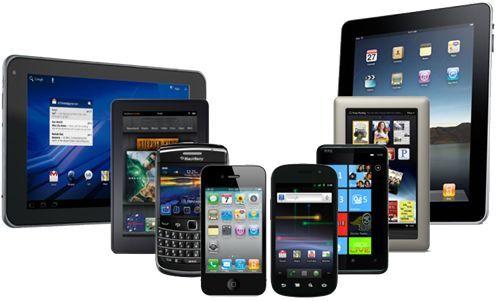
Note that this goes well beyond simply bringing an unused phone from a particular carrier back to the same carrier to activate service. It means that you can bring ANY phone that's compatible with the carrier's cellular network, regardless of where you originally bought it. In other words, if you own a Sprint phone, you could theoretically activate it on dozens of differing Sprint MVNOs, which all use the Sprint network, and are therefore technologically compatible.
In addition, now that the GSM vs. CDMA battle is behind us, and the worldwide standard is 4G LTE, coupled with smartphones that support multiple frequencies and wireless bands, your ability to bring you phone to virtually any wireless provider has exponentially increased.
Historically, especially in North America, even providers like MVNOs that obviously work on their host's network, wouldn't allow you to bring phones to their service. Essentially, once you buy a phone that works on one carrier's network, it forever into the future can only be used on that provider's service. So if you buy a Sprint phone, you can't use it on Virgin Mobile, Boost Mobile, Ready Mobile, kajeet, etc. The business model was really to control the entire experience, including the physical hardware, even though that isn't really the most profitable strategy.
Why Did Carriers Historically Restrict Phones?
Historically wireless providers wanted to control the customer experience 100%. They spend a ton of money testing devices to ensure that all of the functions work properly, and the phone performs as it should. This testing relates not only to the phone itself, but also how it connects with the network; it really is a cellular ecosystem that needs to work smoothly. This delivers the best user experience, and avoids costs later down the line when customers call with complaints and issues with phones that the carrier many not know anything about. When you look at it from this perspective, it sounds like a very logical approach.Also, a major concern has been that carriers historically subsidized phones (even prepaid carriers, though that is becoming less common), which means that if you don't continue service with them, they could lose money. Postpaid carriers have historically had early contract termination fees to mitigate this issue; however, prepaid carriers can actually lose money if you don't stay around long enough when they've subsidized the phone. So if they unlock your phone for you, or you otherwise find a way to unlock it on your own, and use it on another compatible carrier's network, they could stand to actually lose money. So in that sense, it wasn't as much about keeping phones off their network, but locking phones to their network to prevent costly switching.
So Why The Change Of Heart?
Wireless has evolved such that now, on average, people have at least on (or more!) wireless phones. In other words, the game has changed. Wireless growth is no longer about getting new wireless customers (i.e. people who have never had a wireless phone before) to essentially stealing/luring customers from competitors. Allowing you to bring your own phone allows them to broaden their reach. You may have a perfectly good working phone that you enjoy using, and don't want to change carriers because that would mean that you would have to buy a new phone. You may even have a case, a screen protector, and other accessories that aren't compatible with other phones. Well, if you could take your phone with you, wouldn't you be more open to more and better service options? The answer is a resounding "of course"!Does Any Phone Work?
There's one important element that any bring your own device program has, which is that the phone cannot be active on another network, and it cannot be on their blacklist. What this means, simply put, is that you must fulfill your contract if you are on a postpaid plan before you can take that phone to a carrier that has a bring your own device program. Second, you cannot steal a phone and activate it. This is a good thing as it protects everyone but thieves, and is a very reasonable restriction.How Is BYOD Different Than Phone Flashing?
Wireless dealers have been flashing compatible phones to various networks for many many years. What's unique about BYOD is that the carrier officially supports certain phones. When you flash over a phone at a wireless dealer, not only do you have to pay for that service, but there's no guarantee that all of the features of the phone will work. Some will support voice and text only (i.e. no data!), others will not support MMS (i.e. picture messaging), and some will work 100% for all features. You'll often never really know what will work until you try. That said, even with bring your own device programs, be sure to ask about these features to ensure that there's no surprises. Conclusion
About Bring Your Own Device
Conclusion
About Bring Your Own Device
Generally speaking, this is a win-win for customers and carriers.
Wireless providers in European countries have long since
focused on service features, allowing customers to bring any phone
they want. These were historically countries using the GSM
standard, and
customers there are used to paying full price for their phones (i.e.
un-subsidized). With LTE being the new worldwide standard,
the U.S. can now more easily support bringing your own device.What Carriers Support Bring Your Own Device?
Note that many carriers have allowed flashed phones on their network; some knowingly (ex. Legacy Cricket with their Customer Provided Equipment program, Page Plus, Simple Mobile, etc.), and others unknowingly. There are so many carriers now that support it one way or the other, and the number continues to grow everyday as people expect more flexibility. In fact, many carriers actively promote "BYOD" as a bonafide marketing strategy to encourage customers to switch for little or no cost or headache. The following table summarizes the various ways you can ultimately bring your own phone to a given carrier.| Method | Notes |
| Unofficial Phone Flashing |
|
| Official Phone Flashing |
|
| Unofficial SIM Swapping |
|
| Official SIM Swapping |
|
Home
›
Prepaid Providers
›
Bring Your Own Device
| Be Heard! Let prepaid wireless providers know what you want; fill out the survey now. |



Copyright 2008-2023 Prepaid-Wireless-Guide.com - All Rights Reserved
Click to read the Privacy Policy
Comments
Have your say about what you just read! Leave a comment in the box below.